Budget Like a Boss: Always add a 15-20% contingency fund. Track daily – not monthly – to catch creeps early.
Market Mastery: Study local indices like the Fix-and-Flip Market Index[11] . In cooling markets (e.g., post-2025 rate hikes), focus on quick cosmetic flips over gut jobs.
Team Synergy: Tie back to your core team (GC, inspector, etc.) – mandate shared progress reports to avoid siloed surprises.
Exit Early Planning: Run "what-if" scenarios for worst-case sales. If rates rise, have a rental backup plan.
Learn from Losses: Post-flip audits: What bled profits? Adjust for next time.
Daily Drip Checks: Review budgets every day – catch 5% creeps before they hit 20%.
Buffer Everything: Pad timelines, costs, and ARVs. Optimism kills profits.
Fire the Bleeds Fast: If a vendor or issue is draining, pivot immediately – no sunk cost fallacy.
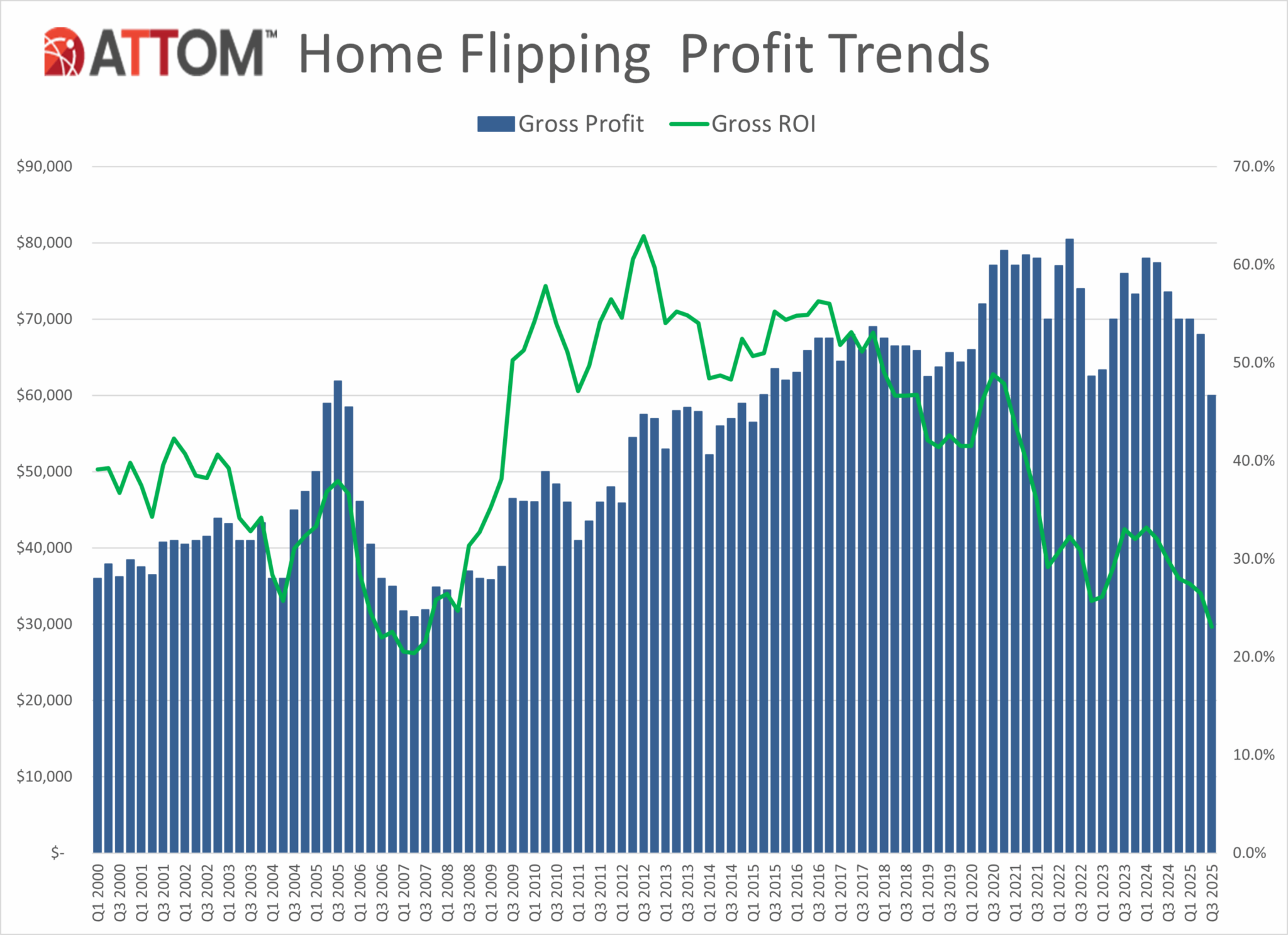
Hey flippers – ever feel like your profits are slipping away faster than sand through your fingers? You're not alone. In 2025, home flipping profits hit a 17-year low, with typical ROI dropping to just 23.1% – the worst since 2008.[1] That's a far cry from the glory days, and with 12% of flips breaking even or losing money outright,[2] it's clear: most flips aren't failing spectacularly; they're bleeding out slowly from hidden leaks.
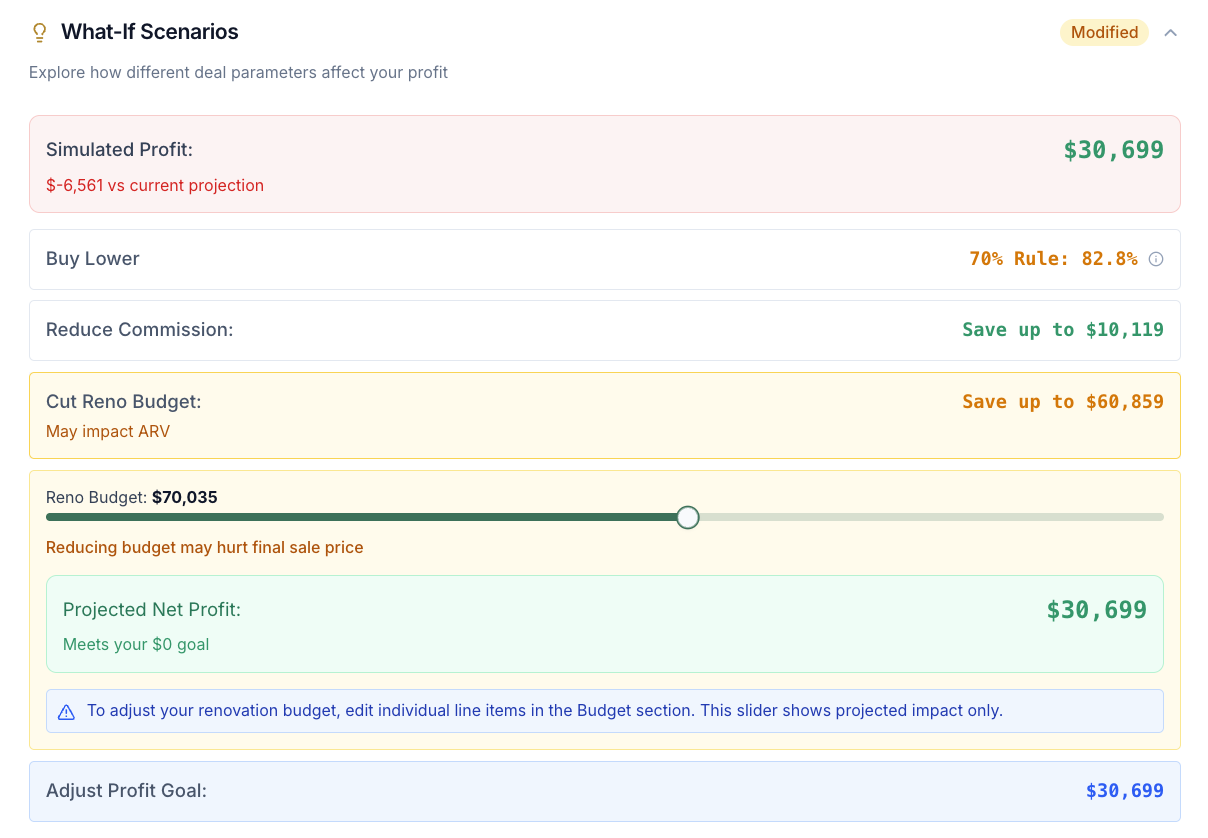
Enter the Profit Bleed Slider™ – our exclusive trademarked framework at ProfitGuard to visualize all costs, which silently erode your after-tax profits overtime. It pulls in live expense data as you log them, provides a clear category-by-category budget view, and displays a visual timeline of profit decay revealing the compounding impact—so you can set realistic timelines, spot when a flip is turning into a money pit, and decide proactively when to cut losses or accelerate to preserve your margins. Think of it as a dashboard slider that adjusts as costs creep up, alerting you before a drip turns into a flood with build in what if scenario functionality. Unlike basic spreadsheets, this dynamic feature alerts you before small drips become major floods, empowering flippers to protect ROI in today's tighter markets. But this isn't just about our app (though it integrates seamlessly); it's about arming you with the knowledge to stop the bleed, whether you're using tech or old-school spreadsheets.
In our last post, we covered building your dream team to scale flips. Now, we're diving deeper into why even solid teams lose margins – and how to plug the holes for good. Let's break down the top five profit bleeds, complete with real-world examples, red flags, and fixes.
The Top 5 Profit Bleeds (And How to Seal Them)
We've crunched the data from thousands of flips, plus insights from industry reports, to pinpoint these culprits. Spoiler: High home prices, soaring material costs (up 20% in 2021-2022 alone[3]), and interest rates in the 6-7% range[4] are squeezing everyone. Here's a breakdown:
Profit Bleed | Why It Happens | Red Flags | How to Stop It | Tool Tie-In (Neutral Options) |
|---|---|---|---|---|
Overpaying for the Property | In hot markets like Phoenix or Dallas, competition drives bids up, leaving no room for rehab or resale profit. Cheapest properties (<$50K) often lose 14% on average.[5][6] | ARV estimates based on outdated comps; ignoring local trends like inventory shortages. | Run detailed comps using recent sales data (within 3 months). Factor in a 10-15% buffer for market dips. Example: In Memphis, a flipper overpaid by $20K on a $150K fixer-upper due to unaccounted flood risk – sold at break-even after repairs. | Apps like ProfitGuard's ARV calculator or free tools like Zillow's Zestimate with manual adjustments; consult local realtors for hyper-local insights. |
Underestimating Rehab Costs | Material and labor inflation hits hard – think lumber prices spiking or subs ghosting mid-job. 77% of metros saw home prices rise in Q3 2025, pushing reno budgets over.[7] | Vague bids from contractors; skipping detailed scopes. | Create line-item budgets with 20% contingency. Get multiple quotes and lock in prices. Urban example: A Chicago flip ballooned $15K from unexpected plumbing in an old Victorian; rural case: A Texas ranch-style home added $10K in septic surprises. | ProfitGuard's OCR scanning for quotes, or alternatives like Excel templates from BiggerPockets with inflation trackers. |
Holding Costs Eating Margins | Delays from permits, weather, or supply chains rack up interest, taxes, insurance, and utilities. High rates mean every extra month costs 0.5-1% of the loan.[8] | Projects dragging past 90 days; ignoring seasonal factors. | Aim for 60-90 day flips. Build timelines with buffers and weekly milestones. Case: A Florida investor lost $8K in holding on a delayed roof job during hurricane season. | Shared dashboards in ProfitGuard for team visibility, or Google Sheets with automated alerts via scripts. |
Unexpected Surprises & Hidden Defects | Asbestos, mold, or structural issues uncovered post-purchase – common in older inventory. | Skimping on inspections; buying sight-unseen. | Invest in thorough inspections (thermal imaging for hidden leaks). Add "surprise clauses" in contracts. Example: A Dallas flip revealed foundation cracks, adding $25K; prevented by a $500 engineer consult. | AI-powered anomaly detection in tools like ProfitGuard, or standalone apps like Home Inspector Pro for reports. |
Poor Exit Strategy | Misjudging resale timing or pricing leads to price cuts. With inventory low, flips sit longer if overpriced. | Optimistic ARV without buyer feedback; ignoring rate impacts on buyers. | Stage virtually first, price 5% below comps to spark bids. Network with agents for quick listings. Phoenix example: A staged flip sold in 14 days for $30K over ask; unstaged neighbor lingered 60 days, cut $15K. | Market trend trackers in ProfitGuard, or free NAR reports[9] combined with Redfin data. |
Explore how ProfitGuards Profit Bleed Slider™ - a dynamic visual tool that illustrates how surprises and cost overruns compound and erode profits. It helps identify opportunities to realign your project by adjusting various slider inputs, enabling what-if analyses to offset setbacks and get things back on track when projects veer off course. this is in the Project Onboarding wizard was well as a feature in the Project Details area of the application, always on guard and always reporting on deviations from plan.
These aren't just hypotheticals – they're drawn from real flips across urban hubs like Atlanta (where investor buys dropped 65% due to risks[10]) to rural areas facing supply chain woes.
Rural vs. Urban Bleed Dynamics: These bleeds hit differently depending on location. In rural markets, holding time and financing costs often compound fastest—slower buyer pools can stretch flips to 9+ months, turning a 1% monthly carry into 10–15% profit erosion. Urban flips usually move quicker (under 6 months), but material/labor overruns and permitting delays can spike rehab costs by 15–25% if not locked in early. Use the Profit Bleed Slider™ to model your specific market and adjust bids accordingly—e.g., pad rural deals with extra buffer for extended holds
Pro Tips to Lock In Profits
Real Flip Case Study: From $18K Bleed to $45K Profit
Take Sarah, a mid-level flipper in Texas. Her 2025 Q3 project: A $180K buy with $50K rehab budget. Bleeds hit hard – $12K in material overruns (lumber up 10%), $4K holding from permit delays, and $2K in surprise electrical. Total bleed: $18K, leaving slim margins.
Using the Profit Bleed Slider™ approach: Real-time alerts flagged the overruns at $5K in. She switched subs, cut non-essentials, and sold in 75 days. Result: $45K profit after sealing leaks. Without intervention? Break-even at best. (Neutral note: Similar wins with manual tracking via apps like QuickBooks.)
Ready to catch your own profit bleeds before they happen? Plug in your numbers, start a quick 30-day trial of ProfitGuard to access the full Profit Bleed Slider™ and real-time alerts. Don't let another flip slip away—take control today!
3 Ironclad Rules to Master the Slider
Seal Your Profits Today
The Profit Bleed Slider™ isn't magic – it's disciplined flipping in a tough market. With ROI scraping lows and 12% of deals tanking,[2] you can't afford leaks. Build on your team from last post, apply these seals, and watch your flips scale to 5-10+ per year without the bleed.
Ready to slide into higher profits? Check out ProfitGuard for a free trial – or start with basic spreadsheets if you're bootstrapping.
Next up: "Scaling Flips Without Scaling Stress – Automation Secrets."
What bleeds have you battled? Drop a comment below or reach out to us in the X Community , Tag us @profitguardapp !
Source: ATTOM Q3 2025 Home Flipping Report.
https://www.forbes.com/sites/terriwilliams/2026/01/31/house-flipping-mistakes-to-avoid-in-2026---and-also-advice-that-works/
Source: Forbes article on house flipping mistakes in 2026 highlights:
https://www.redfin.com/news/housing-market-predictions-2026/
Source: Redfin’s 2026 Predictions
https://www.parealtors.org/blog/home-flipping-profits-falling/
Source: Hope Walborn reivew of ATTOM Q3 2025 Report↩
Source: FairFigure House Flipping Statistics 2026.↩
Source: ATTOM Q3 2025 Report, latest available at the time of this post↩
Source: MortgagePoint analysis of ATTOM Q3 2025 Data↩
Source: NAR Q3 2025 Report↩
Source: YouTube Video on Investor Purchases (transcript reference)↩
Source: The Fix-and-Flip Market Index (FFMI) is a quarterly index developed by John Burns Research and Consulting (JBREC)↩